a romantasy author learning to build a life worth living
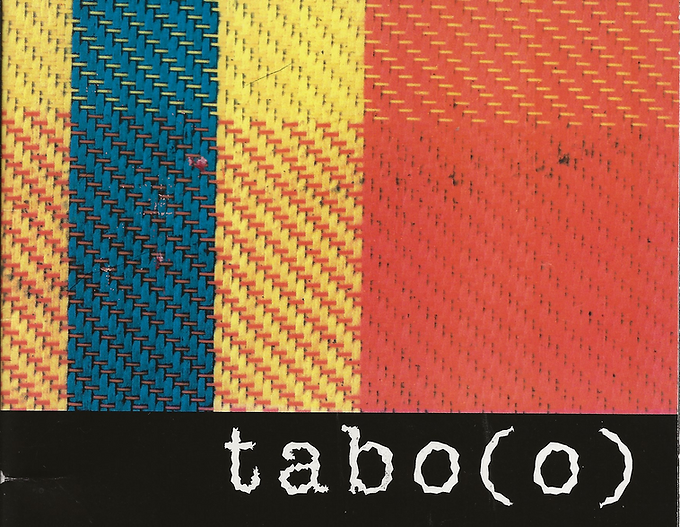
tabo(o) opening statement
An essay I wrote for the tabo(o) art exhibit curated by Alvin Gregorio & Christine (Morla) Armstrong, Claremont Graduate University, 2000. Booklet designed by Charleen Morla-Garcia.
Until I entered junior high school, Mama used to help me wash my hair. She would catch the running water from the bathtub faucet with the tabo and briskly douse my long black hair. She lathered the shampoo gel so that it bubbled and foamed, and rinsed my hair so that the thick, coarse strands slithered gently down my back. During those early years, before I learned to hide my body from her, bathing with Mama signified the intimacy of our bond. Without words and instruction, we communicated our belonging to each other, the unquestioning permission I gave, and the liberty she took. In that moment, I knew my place, and I trusted that I would always be safe.
As I grew older, Mama and I drifted apart. I began to identify with images located outside my body. The bathing rituals were deferred. Instead of hearing stories about how scared Mama had been when I was born, how desperately she tried to protect me from getting sick, and how often she bathed me so that I would stay clean; I started developing my own stories. Independent of my previously shared history with Mama, I started to tell the American friends I grew up with in the military that I had never needed anyone else’s help to wash my hair. I denied that there was anything special about me, although my friends seemed to perceive my hair as a mystery: so long, black and shiny, so foreign and exotic that they imagined all Filipino girls grew up having long hair such as mine.
Eventually, the more American I strove to become, the more I rebelled against claiming the “other” part of my identity that none of my friends could understand. What if I told them that Mama valued my hair so much because it reminded her of the cultural traditions she had grown up with back home in the Philippines? What if I told them that it empowered Mama to have her daughter authenticate the bond her own mother, my lola, had rejected? What if I told them how painful it was for Mama to see me disown that bond the more I grew up? Of course, I never told my friends that Mama used to help me wash my hair; I would blush if I described the purpose of the strange-looking object in the bathroom with its stout plastic handle and deep cup-shaped container.
Although I kept the symbolism of the tabo a secret from my friends, I renewed the experience at age fifteen when I visited the Philippines with my family. With only a bucket and a tabo, Mama showed me how to cleanse myself thoroughly before running out of the cold harsh water. The years following, I would struggle with the secrets that I kept from my friends and family, the American girlhood that I longed to identify with and the bonds of tradition that I yearned to dissolve.